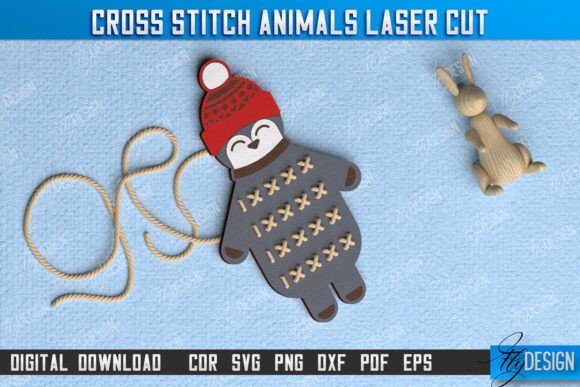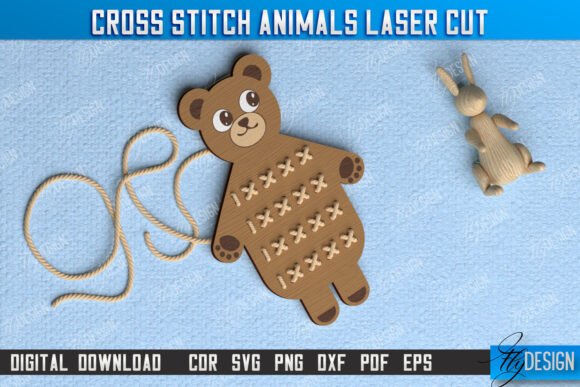
Cross Stitch Bear Montessori Lacing Design Review
As a professional embroidery designer specializing in commercial merchandise and brand identity, I approach every new asset with a critical eye toward production viability. When evaluating the Cross Stitch Bear Montessori Lacing design for small business applications, my primary focus shifts from simple aesthetics to functional durability and brand alignment. While this product is originally categorized under Other Toys Games and marketed as a CNC file for laser cutting machines, its visual structure offers unique opportunities for apparel decorators and handmade brands looking to create distinctive embroidered patches and custom apparel.
Visual Personality and First Impressions
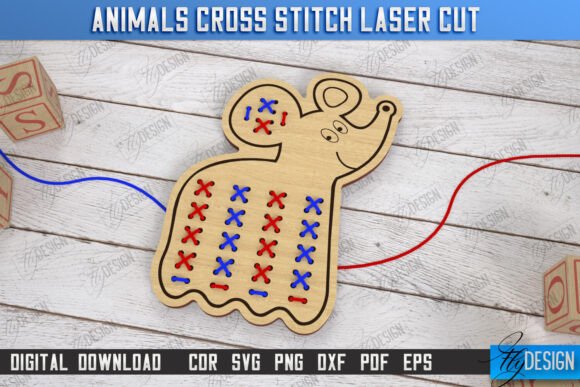
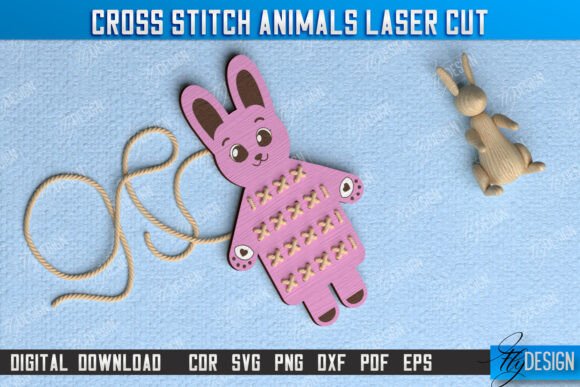
The immediate impression of the Cross Stitch Bear Montessori Lacing motif is one of nostalgic warmth combined with structured precision. Because the source file utilizes distinct RED lines for cutting and BLACK lines for engraving, the design inherently possesses high-contrast definition. For an embroidery digitizer or merch creator, this clarity is invaluable. The aesthetic feels undeniably handmade yet professionally organized, striking a balance that is difficult to achieve in digital embroidery files.
For businesses such as children’s boutiques, educational studios, artisanal bakeries, or pet brands, this design communicates trust and care. It avoids the overly sterile look of corporate vector art while maintaining enough geometric discipline to reproduce cleanly on fabric. The "lacing" element suggests connectivity and tactile engagement, making it particularly effective for brands that want to emphasize customer interaction or hands-on service. However, because it originates from a laser cutting context, designers must verify that the line weight translates effectively into stitch paths rather than relying solely on the engraved visual guide.
Commercial Applications for Small Business Merch
In a real-world business scenario, versatility is key. I have evaluated how Cross Stitch Bear Montessori Lacing performs across various commercial embroidery projects. For a local café or creative studio, this design serves as an excellent chest logo accent on staff uniforms. The bear motif provides a friendly mascot quality that softens the professional uniform without sacrificing authority. When applied to apron embroidery, the design can be scaled up to serve as a central branding element, reinforcing the handmade product ethos that many modern consumers seek.
For Etsy sellers and craft business assets, this design works exceptionally well as an embroidered patch. Patches are a low-risk entry point for testing new merchandise, and the defined borders typical of lacing designs lend themselves perfectly to merrowed edges or satin stitch borders. Additionally, tote bag design benefits from this motif; the open nature of cross-stitch style graphics often requires less stabilizer and reduces fabric puckering on canvas materials compared to dense fill stitches. Cap embroidery is another viable avenue, provided the design is resized appropriately for the curved front panel. As a branded product add-on or packaging accent, stitching this bear onto cloth tags or drawstring bags elevates the perceived value of the finished product significantly.
Production Considerations and Technical Constraints
Despite its charm, Cross Stitch Bear Montessori Lacing requires careful technical evaluation before mass production. Because the original file is intended for laser cutting, the stitch density must be recalculated for textile use. Laser lines are single vectors, whereas machine embroidery design requires width and texture. If you attempt to run this as a simple running stitch outline at a small patch size, the details may get lost or cause thread breaks. Digitizers should consider converting the "lacing" sections into satin stitches or bean stitches to ensure visibility and durability.
Fabric texture plays a massive role in the success of this design. On smooth cotton twill or poplin, the cross-stitch geometry will remain crisp. However, on textured fabrics like linen or terry cloth, the intricate lacing details may sink into the weave. In these cases, using a water-soluble topping is non-negotiable to maintain design integrity. Furthermore, if applying this to dark uniforms, thread colors must be selected for maximum contrast. A cream or gold thread against navy fabric will highlight the bear’s features better than a subtle tone-on-tone approach, which might obscure the lacing detail.
Cap embroidery presents specific challenges due to the limited hoop size and curved surface. The vertical elements of the lacing may distort if not properly compensated during digitizing. Always test the design on a scrap cap before committing to a full production run. Similarly, items requiring frequent washing, such as work shirts or aprons, demand secure anchoring stitches. Since this is adapted from a CNC file, ensure all jump stitches are trimmed and locked to prevent unraveling after industrial laundering.
Impact on Brand Identity and Customer Trust
Integrating Cross Stitch Bear Montessori Lacing into your merchandise strategy does more than decorate a garment; it reinforces brand identity. For businesses in the education, childcare, or artisan sectors, this imagery signals patience, tradition, and attention to detail. Customers associate the cross-stitch aesthetic with longevity and quality, distinguishing your brand from competitors using generic clip art. This visual consistency across uniforms, tote bags, and packaging creates a cohesive narrative that enhances buyer engagement.
Moreover, the uniqueness of adapting a laser-cut toy design into embroidery demonstrates innovation. It shows that your brand curates its assets thoughtfully rather than relying on stock libraries. This level of customization builds customer trust and justifies premium pricing for handmade products. Whether used as a boutique merchandise staple or a customer gift, the design carries an emotional resonance that standard logos often lack.
Essential Designer Notes for Implementation
Before adding Cross Stitch Bear Montessori Lacing to your production queue, adhere to these professional best practices:
- Verify Licensing: Confirm commercial licensing terms specifically for embroidery use, as the original product description focuses on laser cutting machines.
- Test in Black and White: Print a line drawing or stitch simulation in grayscale first to evaluate contrast and spacing without the distraction of thread colors.
- Check Hoop Size Compatibility: Ensure the design fits within your machine’s maximum embroidery area while leaving adequate margin for stabilization.
- Create a Printable Mockup: Present a digital mockup to clients or stakeholders for approval to visualize placement on caps, aprons, or shirts before stitching.
- Validate Stabilizer Choice: Match your stabilizer to the fabric weight; cutaway for stretchy knits and tear-away for stable wovens to prevent distortion.
- Inspect Spacing: Review the distance between lacing holes and bear outlines to ensure needles do not perforate the same area repeatedly, which weakens fabric.
- Compare Design Assets: Place this design beside your existing logo suite to ensure visual harmony and consistent brand voice.
- Run a Physical Sample: Never skip the sew-out test. Inspect the backside for excessive jump stitches and verify that the lacing effect reads clearly from a conversational distance.
By treating Cross Stitch Bear Montessori Lacing as a professional design asset rather than just a craft pattern, small business owners can unlock significant merchandising potential. The transition from CNC file to embroidered patch requires technical diligence, but the result is a versatile, emotionally resonant brand mark that stands out in a crowded marketplace. Always prioritize production testing and fabric compatibility to ensure your custom apparel meets the high standards your customers expect.