Cross Stitch Deer Laser Cut Montessori Review
As a professional embroidery designer specializing in commercial branding and small business merchandise, I approach every new asset with a critical eye for production viability. When evaluating the Cross Stitch Deer Laser Cut Montessori file, my primary focus is not just its aesthetic appeal as an educational toy component, but its potential translation into branded merchandise. While this product is categorized under Other Toys Games and intended for Laser Cutting machines, the geometric nature of cross-stitch aesthetics offers unique opportunities for apparel decorators and handmade brands. Below is my technical review of adapting this design concept for commercial embroidery applications.
Visual Personality and Brand Alignment
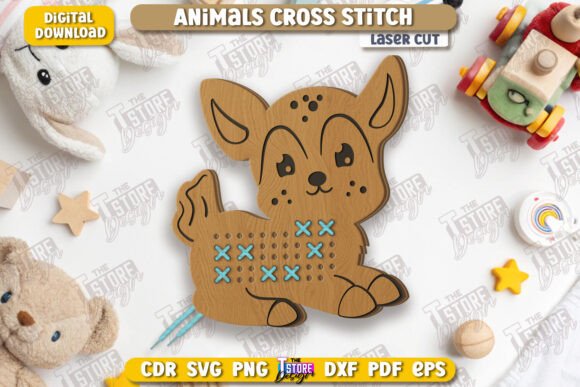
The first impression of the Cross Stitch Deer Laser Cut Montessori design is distinctly rustic yet structured. The pixelated, grid-based aesthetic inherent to cross-stitch styles communicates a sense of tradition, patience, and handcrafted quality. For small business owners, this visual language is powerful. It suggests authenticity, which is crucial for bakeries, florists, pet brands, and creative studios aiming to build trust through brand identity.
Unlike fluid, organic illustrations that can sometimes lose definition when digitized for thread, the blocky nature of this deer motif retains clarity at various scales. This makes it exceptionally suitable for businesses that need versatile design assets. However, because the original file specifies RED lines for cutting and BLACK lines for engraving on laser machines, embroiderers must understand that we are essentially interpreting vector paths into stitch data. The result is a bold, friendly, and modern-classic hybrid that avoids looking overly juvenile, allowing it to function effectively on adult custom apparel and staff uniforms rather than just children's items.
Commercial Applications for Small Business Merch
In a real-world scenario, imagine a local boutique or artisan café seeking to unify their team’s look while selling branded goods. The Cross Stitch Deer Laser Cut Montessori aesthetic adapts surprisingly well across multiple small business merch categories:
- Apron Embroidery: The high-contrast, geometric deer silhouette reads clearly against denim or canvas aprons. It serves as an excellent chest logo or pocket accent that withstands the industrial laundering typical in hospitality environments.
- Tote Bag Design: Natural cotton totes provide the perfect textured backdrop for this style. The cross-stitch look mimics woven fabric, creating a cohesive handmade product feel that customers associate with eco-friendly and sustainable brands.
- Cap Embroidery: Structured caps often struggle with intricate details. Because this design relies on solid blocks of color and clear outlines, it performs better on curved cap fronts than delicate line art would.
- Patches and Labels: As an embroidered patch, this design can be produced in bulk and heat-sealed onto work shirts, beanies, or even product packaging. The distinct outline (originally intended for laser cutting) translates perfectly into a merrowed edge or satin border for patches.
For Etsy sellers and digital creators, this motif also works beautifully as a branding element on thank-you cards or stickers, reinforcing the visual consistency between your physical products and your digital presence.
Technical Considerations and Production Risks
Despite its versatility, the Cross Stitch Deer Laser Cut Montessori file requires careful handling during the digitization and production phases. Since the source is a CNC/laser file, specific embroidery parameters are likely not included. You must verify stitch density, hoop size, and licensing before beginning commercial embroidery projects.
Stitch Density and Fabric Texture
Cross-stitch emulation in machine embroidery involves high stitch counts. If you attempt to replicate the exact "pixel" look using individual satin stitches or fill patterns, you risk creating a bulletproof patch that puckers lightweight fabrics. On performance wear or thin t-shirts, this density can cause tearing. I recommend testing on fabric texture similar to your final product. For lighter garments, consider simplifying the design into a flat fill or appliqué rather than true cross-stitch emulation to reduce stitch count and improve drape.
Sizing and Detail Retention
While the design is bold, reducing it for sleeve cuffs or tiny collar tags requires caution. Small patch sizes can cause the internal details of the deer (such as antlers or facial features) to merge. Always run a sew-out test. If the gaps between stitch blocks close up at 2 inches wide, the design is too complex for that application. In such cases, use a simplified silhouette version for small areas and reserve the full Cross Stitch Deer Laser Cut Montessori detail for larger placements like tote bags or jacket backs.
Thread Colors and Contrast
Laser files rely on line weight; embroidery relies on thread sheen and contrast. A black engrave line on wood looks different than black thread on navy fabric. Before production, review thread colors against your specific garment colors. High contrast is non-negotiable for this style to maintain its graphic impact. Test in black and white first to ensure the value structure holds up without relying solely on color differentiation.
Impact on Customer Trust and Product Value
Using a deliberate, stylized design like Cross Stitch Deer Laser Cut Montessori signals intentionality to your customers. In the saturated market of handmade and boutique goods, generic clipart lowers perceived value. Conversely, merchandise that features cohesive, well-executed design elements elevates the entire brand. When a customer receives a purchase wrapped in tissue paper sealed with a sticker matching the staff’s embroidered aprons, it reinforces professionalism.
This level of visual consistency builds recognition. The "Montessori" association subconsciously communicates safety, education, and natural materials, which can be leveraged by pet brands, plant shops, and family-oriented businesses to deepen buyer engagement. Even if the end user never knows the file originated from a laser cutting category, the resulting finished product carries a tactile, premium quality that standard corporate logos often lack.
Designer Notes for Successful Implementation
To ensure the Cross Stitch Deer Laser Cut Montessori design succeeds in a commercial environment, follow these practical steps before mass production:
- Verify Commercial Licensing: This is paramount. Just because a file is available for laser cutting does not automatically grant rights for digital embroidery file resale or unlimited commercial merchandise production. Confirm the license terms specifically cover embroidered goods.
- Create a Printable Mockup: Before stitching, place the design digitally on photos of your actual merchandise. Share this printable mockup with clients or stakeholders for approval to manage expectations regarding size and placement.
- Test Stabilizer Pairings: Due to the potential density of cross-stitch styles, use appropriate stabilizer. Cutaway stabilizer is generally safer than tear-away for this type of design to prevent distortion during washing.
- Compare Beside Existing Assets: Print the design at actual size and place it next to your current logo or other branding elements. Ensure the visual weight matches. If the deer looks too heavy or too light compared to your text logo, adjust the scale or density accordingly.
- Check Hoop Compatibility: Ensure the design fits comfortably within your machine’s hoop size with adequate margin for framing. If resizing is necessary, do so within professional digitizing software to recalculate stitch paths, rather than simply stretching the file.
By treating the Cross Stitch Deer Laser Cut Montessori file as a foundational design asset rather than just a toy component, small businesses can create distinctive, high-value merchandise that stands out in a crowded marketplace. Always prioritize testing and technical verification to bridge the gap between laser-cut precision and embroidered warmth.